Product taste: An old skill wearing a new name.
Everything old is new again, including Product Sense.
PRODUCT LEADERSHIPCUSTOMER OBSESSIONFOR FOUNDERS
7/13/20263 min read
How do you make the best out of a bad situation when you have a product that is a loser?
That was the question before me early in my career. The answer was simple: if it isn’t making money, if it isn’t of value to anyone, get rid of it.
It was a giveaway reporting product buried inside a bundle. It didn’t have a growth target. It didn’t have a roadmap. The only thing it did have was the salary costs of a handful of developers who were occasionally pulled off of their revenue-generating products to update it from time to time, and now its time had come.
By every metric that mattered to the business, it should have been retired.
It seemed like a no-brainer, so I went about End-of-Lifing it. I started reading up on the account notes and support tickets to get a feel for who I’d need to write the end-of-service letter to.
It wasn’t some vision and I’d barely call what I was doing research.
I was just looking to make sure that the customers had the right expectation and a list of options from our partners that could take its place.
A small pocket of customers, spread across different accounts, kept mentioning this thing. Not in glowing reviews. Just offhand, in the middle of a support ticket or a renewal call, the way you'd mention something you assumed everyone already knew. It didn’t look like anything on paper. Low usage. No revenue line. No feature requests. Not even any professional services contracts because they were building out their own integrations.
They weren’t on the radar until I started looking closer.
There was something about the way the customers talked about it that I couldn't put a number on. I knew it meant something, and I built a case around that “giveaway” before I had the data to fully defend it.
It had value. It wasn’t a throwaway. It wasn’t one that could have been replaced by sliding in a partner’s solution and expecting them to start from scratch. That wasn’t the responsible thing to do.
Later that same year, the relaunched product became a $1M revenue generator.
That's product taste. It's not a feel for what looks polished. It's the ability to catch the heartbeat of an opportunity before it shows up on a dashboard, and trust it enough to act while the business case is still being written.
I'd ask you: when's the last time you built a case around something you couldn't fully justify yet, just because you knew? When did you look at where your customers are quietly depending on you even if it’s not where they’re paying the most?
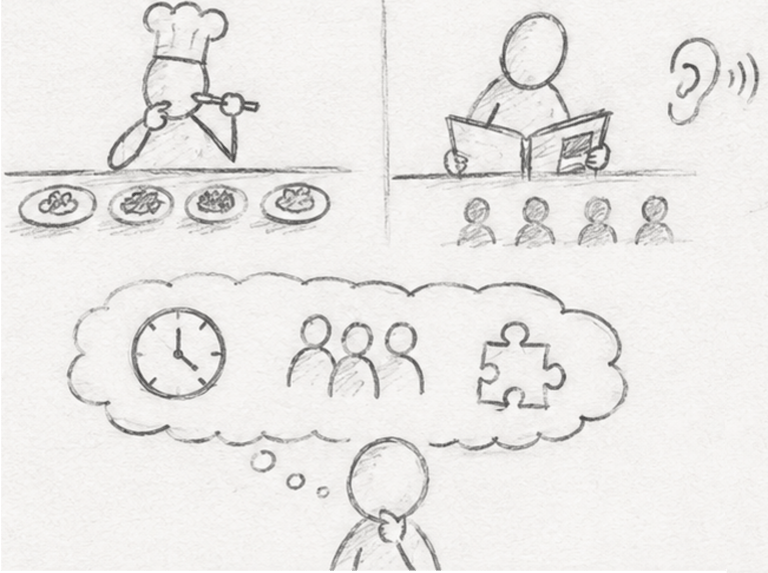
Keep in mind that none of this works if the "signal" is really just your own opinion in disguise. A chef's palate is trained on thousands of plates other people ate, not just the ones they liked. An editor's ear is tuned by other people's sentences, not their own. Taste that never touches a real customer isn't taste. It's just vanity.
What gets lost in the many, many takes on product sense isn’t that it’s new. Architects call the same thing proportion. It’s the ability to feel a room is wrong before they can explain what's off about it. Product people have needed some version of this for as long as the job has existed.
Where has your own judgment gotten there before your data did? And what is it telling you about where the real fit already lives?
Related Posts
I work 1:1 with product managers on one significant challenge at a time. Three sessions, one a week, and we review where you are and where you want to be rather than leaving you with a generic list of things to try.
My first question would be: What's the one thing you'd want to be different by the end of the month?
IF I WERE YOUR PRODUCT COACH...
It starts with a free 30-minute call to figure whether my style of coaching makes sense for you.